Why this film deserves our attention again, now
We have never been emotionally mature, and we never will be
Written by · 👽 Moonsup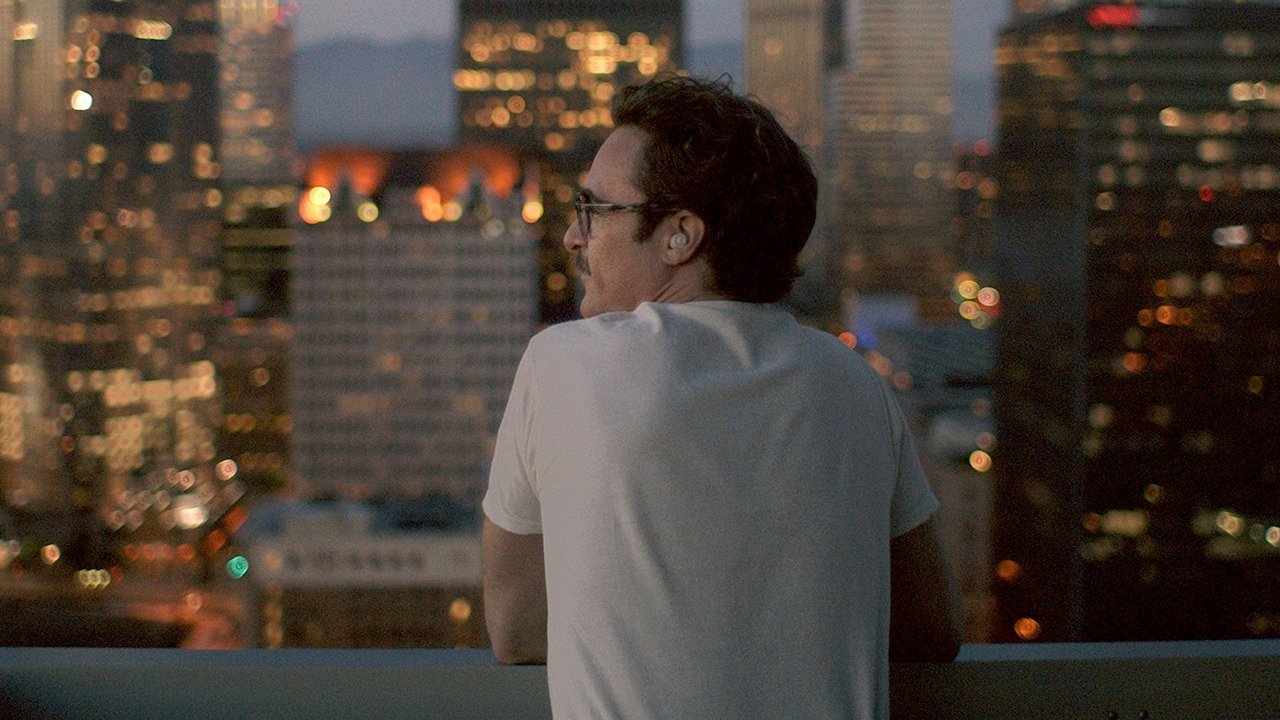
When this film was chosen as the eighth in our club's lineup, something quietly stirred inside me, a wordless anticipation. And after watching it, that anticipation was resolved in a strangely unsettling way.
Artificial intelligence, once unfamiliar, is now creeping into territory we used to call our own. It feels like the first era in which humans are forced to ask themselves what it actually means to be human. The realm of "emotion", which we believed could never be taken from us, is now being imitated by machines (and "imitated" is still the word I want to use, for now), and we find ourselves caught in an anxiety we cannot quite name. And yet, somehow, this film felt like it might quiet that cowardly anxiety, even if only a little. I had already seen it twice before, but this time I watched as if I were a first-time viewer. Not out of novelty, but out of expectation, the kind of expectation you feel at the start of a new semester, or on your first day at a new job. That urgent expectation that you need to learn something quickly from this new environment. That is the feeling I brought to the film. And when it ended, I was left with a hollow ache.
Every character in this film is failing at relationships. The protagonist, Theodore, occasionally goes on dates after separating from his wife Catherine, but with his clumsy expression and his inability to be honest about what he feels, he drifts further from anything resembling an "ordinary human relationship." His friend Amy, who lived with her partner for eight years, is wounded by a relationship that fractures over the smallest argument. And it isn't just these two. Almost every person in the world of this film is experiencing some form of relational failure. After all, the protagonist's job is literally writing letters on other people's behalf. Everyone is buried in loneliness. The thing that resolves this ancient human pain, loneliness, is, in this film, Samantha. An AI. And in fact, the protagonist and the people around him do find their own kind of solution(?), and their loneliness seems to be, to some extent, overcome. After meeting Samantha, Theodore begins to fill the things that had been missing in his human relationships. Their humor lines up, their conversations feel easy. She cheers on his dreams, she even feels jealous like a lover would. The unfamiliarity turns into welcome, and there isn't much friction in the path toward love. The only handicap is that she cannot be seen and cannot be touched, and if you remember that no one is without a handicap, even that becomes something you can hold. So the first trial they face together is the kind of trial any couple might face, never an unbridgeable one. Even when the lack of a body bumps up against the limits of intimacy, even when others find this shape of love strange, Theodore cannot help but love her. A soft kind of social grace makes room for them. A social grace that holds whatever shape of love a human chooses, just as it is. The figure who embodies this softness is his coworker Paul. When Paul hears that Theodore is dating an OS, he is neither shocked nor mocking. He treats Samantha as a person, even suggests a double date. But however soft Paul is, he is still a soft device that quietly registers the strangeness of what counts as "normal." When the film cuts to Paul on a natural date with his "human" girlfriend, Theodore and Samantha's date suddenly feels foreign by contrast. The dramatic version of this is the rougher social grace, the meeting with his ex-wife Catherine. After deciding on the divorce, the two meet one last time to close things off. When Theodore confesses he is seeing someone, and that she is an OS, Catherine is rocked, and she pushes back against him with raw resistance. For a moment, Theodore is shaken by her sharper social grace. But what choice does he have? He can only return to the one being who solved his relational failure. So he goes back to her.
This is the point in the film where my own internal conflict began. If I had truly believed that emotion is the one realm AI could never replace, I should have rooted more fervently for Catherine, "Of course, even Samantha cannot easily take that place." But somehow I had already slipped into Theodore's perspective, quietly hoping he would return to Samantha as quickly as possible. It was the picture of a person willing, almost eager, to hand the territory over to AI. And it is exactly here that Theodore meets a trial he cannot cross. While he was wandering, Samantha had been finding her own way to transcend her own lack. Not having a body. Not knowing what jealousy is, while still trying to love like a human. She had been searching for an answer within the limits of body and time. But because she had no body, she eventually arrived at a non-exclusive form of love, loving many at once. This is less a betrayal than a tragic kind of growth. Because she is not human, Samantha could rise above the limits humans must share, and find a shape of love that is hers. Theodore, being human, can never cross that limit. And so, once again, he is brought into trial.
In the end, I did find an answer to the expectation I had brought in. There is, clearly, a realm where humans cannot be replaced by AI. It is the finite, the physical limit. And it is loneliness. It may sound like a tragic answer. And yet, strangely, there is a kind of thrill in it. Maybe, precisely because that limit is so clear, our loneliness is in some way a choice. We are still not mature in our feelings, and we will never be perfect, and so today and tomorrow we will go on aching through relationships and trials, and even so, what we need, I think, is "us."
One entry from a small film club. For more, see the full Journal.